
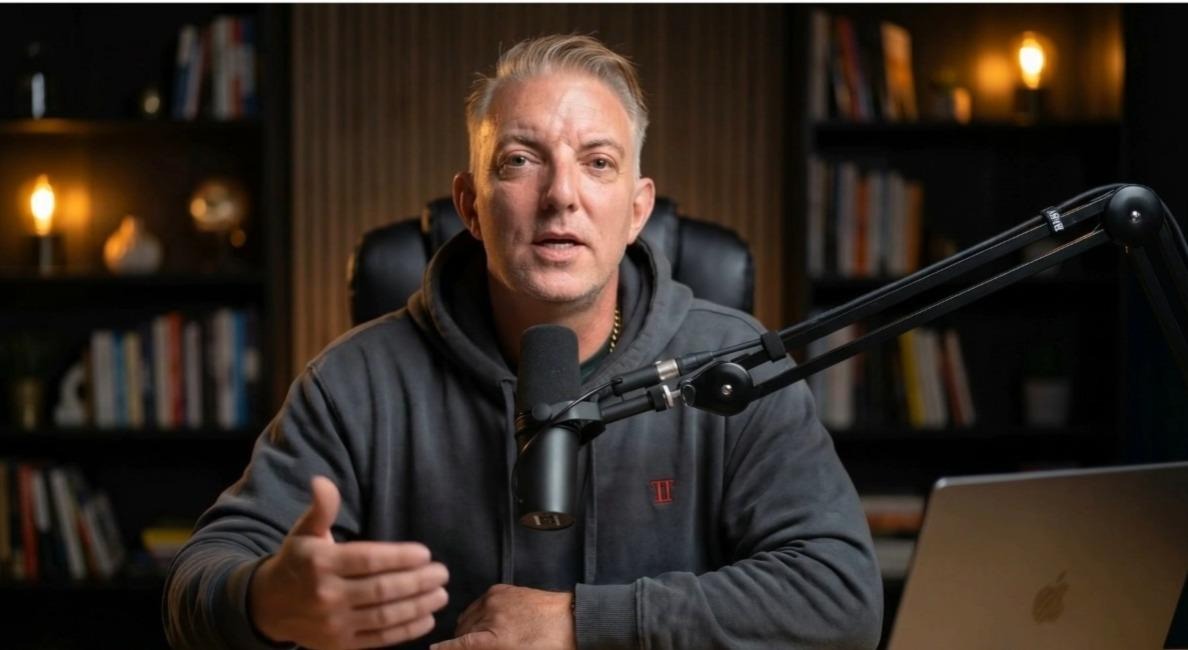
There’s a particular kind of frustration familiar to anyone running a small business: the software stack. A CRM here, a support tool there, a marketing platform bolted on with a Zapier prayer each one excellent on its own, none of them talking to each other, all of them billing monthly. For Lennart Øster, a Denmark-based programmer who has spent three decades writing code, that frustration became a career.
Øster started programming in 1995 and founded his company, SitePoint Systems, four years later, in 1999. For much of the following decade, his path looked conventional enough: consulting work for large companies across Denmark, Sweden, and Brazil, building custom software for clients who needed problems solved rather than products sold. It was steady, respectable work. It was also, he eventually decided, not the shape his life wanted to take.
Fifteen years ago, Øster made a deliberate choice that runs against the grain of most tech-founder narratives: instead of scaling up, he scaled down. Having already run a company with employees, he chose to become a solo founder instead a decision he describes as simply the better fit for himself and his family. Today he occupies a niche with a name of its own: the indie SaaS developer, or solo founder, building and running software products without a team behind him.
The constraint is the point. Working alone forces a kind of ruthless prioritization time is the scarcest resource, so the products have to matter. Øster’s tools tend to emerge the same way, out of his own irritation with what already existed. Needing a reliable cookie-consent management system and finding the available options solid but costly, he built one himself. It has since become a recognized product in its own right. The same pattern produced an email and support tool when nothing on the market fit his workflow, and most recently a full CRM system.
That CRM is where Øster’s disposition toward the industry is clearest. Much of the SaaS world runs on per-seat pricing a model that has made some companies very rich while quietly pricing smaller teams out of using the tools properly, forcing them to ration who gets a login. Øster’s answer was to flatten it: one price, unlimited users. It’s a small structural choice, but it reflects a consistent thread in his work a stated discomfort with pricing models he sees as unfair to small and mid-size businesses, and a preference for undercutting them rather than joining them.
The cookie-consent product went further still. In July 2026, Øster made it fully open source, while continuing to offer a hosted cloud version for businesses that either lack the resources to self-manage a server or need on-premises deployment for regulatory or data-privacy reasons a dual model that tries to serve both the DIY developer and the compliance-conscious enterprise without forcing either to compromise.
Øster is candid about his own motivations, describing himself as someone who loves building and dislikes selling an unusual admission in an industry that often rewards the opposite instinct. He’s equally candid about the financial reality of that choice: not spectacular wealth, but sufficiency, and a stated preference for “giving back and getting by” over maximizing margins.
He remains active as a consultant internationally, building custom software and automation for mid-size companies, alongside his product work. He lives in Denmark, married to Stine Øster, with two daughters, Maria and Maja.
In an industry frequently defined by scale, Øster’s career reads as an argument for the opposite that a single person, with the right constraints, can still build things worth using.